A Smart Kitchen Doesn’t Start with Buying More
Last updated: 21 Sept 2026
53 Views
A Smart Kitchen Doesn’t Start with Buying More
Introduction: A more functional kitchen does not have to be filled with new tools. It begins with understanding what you already own, choosing the right utensil for each task, and investing in quality that fits real life.
A good kitchen is not necessarily the one with the most equipment. Nor does a “smart kitchen” always mean a room filled with the latest appliances. In many homes, kitchen intelligence begins with something much more fundamental: knowing what each tool can do, using it for the right purpose, and organizing the space so that useful items are actually within reach.
A common assumption is that improving a kitchen requires buying more equipment. Yet one of the most effective changes may simply be to look again at what is already there.
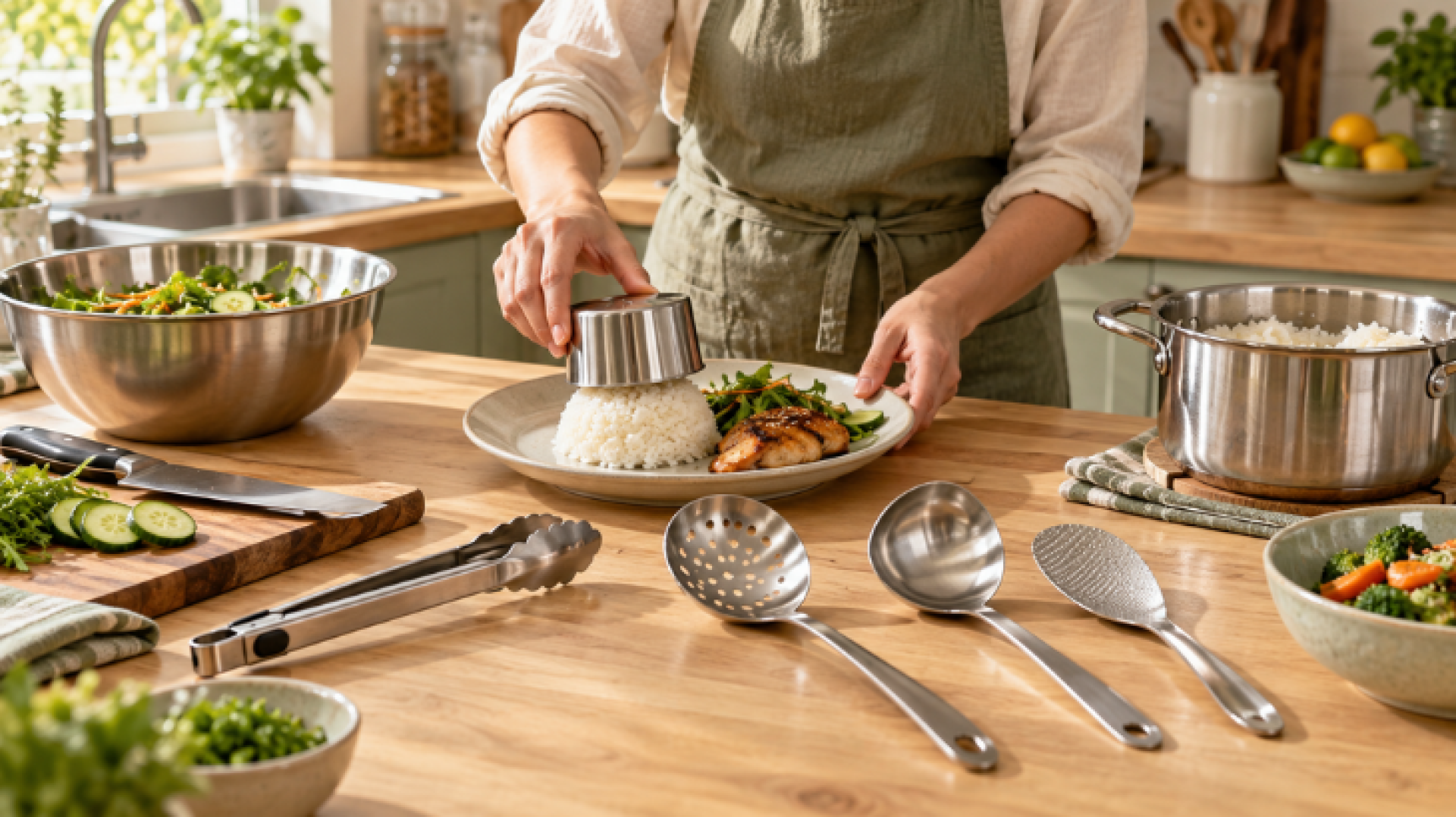
A spoon may do more than carry food to the mouth. A stainless-steel bowl can be used for much more than serving. A measuring cup may double as a mold for neatly shaped rice or desserts. Tongs can turn, lift, and plate food, while certain containers can support several stages of cooking—from preparation to serving.
This is one of the central ideas behind a smart kitchen: understanding the potential of the tools you already have and using each one with purpose.
Before Buying, Ask: “Will I Really Use It?”
Before adding a new item to the kitchen, ask a few simple questions:
How often will I reach for it?
What foods or cooking methods is it designed for?
Can it perform more than one useful function?
Is it easy to clean?
Is it convenient to store?
Is the material durable enough for long-term use?
These questions may sound ordinary, but they help separate an item you merely want from one that genuinely fits your life. A tool that looks exciting on the first day can quickly become clutter if it is difficult to use, hard to wash, or poorly suited to the meals you regularly prepare.
By contrast, a simple tool that performs its function well often becomes something you use every day without thinking about it. The true value of kitchenware therefore lies not in complexity, but in suitability, durability, and comfort over repeated use.
A Smart Choice Begins with the Right Tool
Many kitchen tools look similar, but small design details can significantly change the user experience. A clear example is the difference between a soup spoon and a rice spoon or general-purpose eating spoon.
Both can carry food, yet they are not designed in exactly the same way. A soup spoon usually has a rounder, deeper bowl that holds liquid more effectively. A general eating spoon tends to have a longer oval shape, making it more suitable for rice and a wide range of everyday dishes.
This small distinction reflects an important principle:
Something that “can be used” is not always the tool that is “best suited” to the task.
The same principle applies throughout the kitchen:
Different pot sizes suit different quantities of food. An oversized pot may use unnecessary space and energy, while one that is too small can make stirring difficult.
Shallow plates work well for drier dishes, while deeper plates are better for foods with sauces, broth, or curry.
Slotted ladles lift solid food from water or oil, while solid ladles are designed to carry soups and sauces.
Different knife shapes provide different levels of control and should be matched to the ingredient and task.
Cutlery of different thicknesses, weights, and balance can feel noticeably different in the hand, even when the basic function is the same.
Choosing the right tool is not being overly particular. It is a practical way to make every kitchen task smoother without adding unnecessary complexity.
Introduction: A more functional kitchen does not have to be filled with new tools. It begins with understanding what you already own, choosing the right utensil for each task, and investing in quality that fits real life.
A good kitchen is not necessarily the one with the most equipment. Nor does a “smart kitchen” always mean a room filled with the latest appliances. In many homes, kitchen intelligence begins with something much more fundamental: knowing what each tool can do, using it for the right purpose, and organizing the space so that useful items are actually within reach.
A common assumption is that improving a kitchen requires buying more equipment. Yet one of the most effective changes may simply be to look again at what is already there.
A spoon may do more than carry food to the mouth. A stainless-steel bowl can be used for much more than serving. A measuring cup may double as a mold for neatly shaped rice or desserts. Tongs can turn, lift, and plate food, while certain containers can support several stages of cooking—from preparation to serving.
This is one of the central ideas behind a smart kitchen: understanding the potential of the tools you already have and using each one with purpose.
Before Buying, Ask: “Will I Really Use It?”
Before adding a new item to the kitchen, ask a few simple questions:
How often will I reach for it?
What foods or cooking methods is it designed for?
Can it perform more than one useful function?
Is it easy to clean?
Is it convenient to store?
Is the material durable enough for long-term use?
These questions may sound ordinary, but they help separate an item you merely want from one that genuinely fits your life. A tool that looks exciting on the first day can quickly become clutter if it is difficult to use, hard to wash, or poorly suited to the meals you regularly prepare.
By contrast, a simple tool that performs its function well often becomes something you use every day without thinking about it. The true value of kitchenware therefore lies not in complexity, but in suitability, durability, and comfort over repeated use.
A Smart Choice Begins with the Right Tool
Many kitchen tools look similar, but small design details can significantly change the user experience. A clear example is the difference between a soup spoon and a rice spoon or general-purpose eating spoon.
Both can carry food, yet they are not designed in exactly the same way. A soup spoon usually has a rounder, deeper bowl that holds liquid more effectively. A general eating spoon tends to have a longer oval shape, making it more suitable for rice and a wide range of everyday dishes.
This small distinction reflects an important principle:
Something that “can be used” is not always the tool that is “best suited” to the task.
The same principle applies throughout the kitchen:
Different pot sizes suit different quantities of food. An oversized pot may use unnecessary space and energy, while one that is too small can make stirring difficult.
Shallow plates work well for drier dishes, while deeper plates are better for foods with sauces, broth, or curry.
Slotted ladles lift solid food from water or oil, while solid ladles are designed to carry soups and sauces.
Different knife shapes provide different levels of control and should be matched to the ingredient and task.
Cutlery of different thicknesses, weights, and balance can feel noticeably different in the hand, even when the basic function is the same.
Choosing the right tool is not being overly particular. It is a practical way to make every kitchen task smoother without adding unnecessary complexity.
Related Content

19 Mar 2025

19 Mar 2025